We didn’t flood the new carpets / Why it pays to put due dates on your invoices

Scott and I just spent about a week gradually moving out of our old rental and into a new one. The first order of business was replacing the carpets, a project we’d agreed to take on in exchange for not having to pay rent until the lease on our previous rental ran out.

On our first full day in the house, after the carpets were in, we triggered a small flood during a failed attempt at replacing the ancient water filter. It wouldn’t have been so bad except that the main water shutoff valve is broken (now we know!), so it’s impossible to shut the water main off completely. I’ve never been so grateful for my travel towel.

I was expecting to have to pay the emergency plumber Big Bucks for coming out in the middle of a three-day weekend. Amazingly, the invoice he sent later that day came to only $46 NZD (~$31 USD), a small price to pay for having saved the new carpets, yay!

But that invoice was missing a very critical detail: a due date. In fact, none of the invoices I received over the last couple of weeks — one from the plumber, one from the carpet people, and one from a doctor — included a due date! Clearly I need to share my latest video around:

Spoiler: Continue reading “We didn’t flood the new carpets / Why it pays to put due dates on your invoices”

How to raise money for your business – a couple presentations from the archives

I recently discovered a couple recordings of talks I gave when I was in my Finance for Food prime, traveling throughout North America to give keynote presentations and teach workshops on raising money for food businesses.

My book had already been out for a while by then, so I’d had the opportunity to figure out a few things that I hadn’t known yet when I was writing it. More importantly, I’d also given enough presentations (so many!) to learn which things people really wanted to hear about, and what bored people to tears… so I’d like to think that these two videos deliver the best-of-the-best of what I had to offer back then.

Both of these talks were given to audiences of farmers (the Practical Farmers of Iowa Annual Conference and the Virginia Farm to Table conference, respectively), but I made sure to cover financing options for processed food businesses, too… and so many of these options are available to ANY type of business.

If you want to know about your options for raising money for your business and video is your thing, check these out!

Why I didn’t go to Stanford

I wanted to start this story by stating that I didn’t have any interest in attending Stanford University in the first place, but that can’t be true. Why else would I have been there, surrounded by fellow students in a room much too small for the number of us who showed up to… to what? Impress? Ask questions of? Suss out? the guy Stanford sent to woo us into attending his esteemed educational institution.

This particular representative wore a suffocating air of self-importance along with his beard and tweed sport coat, and I quickly determined that I had made a poor decision by attending the meeting. “It wouldn’t be fair to compare our weather to that of other universities,” he humble-bragged at one point, ”but we do get approximately 300 days of sunshine a year.” I remember wondering: does it make it better or worse that he’s aware of how ridiculous he sounds?

But I perked right up when he asked, “Does anyone know what’s next door to the Monterey Bay Aquarium?”

LogfromSeaofCortez.jpg

I had recently been inside the building next door, lovely from the outside with its ancient wooden siding, the inside packed with dusty jars and odd specimens. The man who once used this lab was nothing short of a hero in my budding-scientist eyes. I’d read John Steinbeck’s The Log from the Sea of Cortez for California Natural History, which chronicles Steinbeck’s adventures with the larger-than-life character; the first seventy pages of the book is a moving eulogy to a man who clearly made an impression on everyone who knew him.

In other words, I knew the answer to this one.

“Ed Ricketts’ lab!” I blurted, relieved that the conversation might finally going in a direction that interested me.

I fail to remember what response Mr. Self Important was looking for. He probably didn’t expect one at all, so comfortable was he in his mansplainer’s role, though that term wouldn’t be coined for another fourteen years. But I will never forget what he proceeded to say to me, or the derisive tone with which he dismissed me, my hero, and any desire I may ever have had to associate with Stanford University:

“Ed Ricketts was a fictional character.” Continue reading “Why I didn’t go to Stanford”

How to measure distance: a poem by Charlotte Pence

Guernica’s e-newsletter led me to a lovely poem by Charlotte Pence (daughter of Spike, not Mike), which led me to her website, which led me to this sparkling nugget, such a perfect thing to discover right after posting my review of In the Distance, Hernan Diaz’s book!

How to measure distance*
a poem by Charlotte Pence

I. Only Use Light Years When Talking to the General Public

or to squirrels testing spring between two
branches. Or to a new mother saddened
by thoughts of earth and its death; sun’s death;
her death. She watches her husband leave
the room for a burp cloth, wonders, could she
do it without him? What’s the measurement
of distance between two people growing
too close, too quickly?

II. The Measures We Use Depend on What We Are Measuring

Distance between parents? Hills? Rogue comets?
Within our solar system, distance is
measured in Astronomical Units.
Or “A.U.,” an abbreviation that
sounds similar to the “ow” of a toe
stub. Or similar to the sound of a mother
teaching the beginning of all sound. “Ah,
eh, ee, oo, uu.” Watch her mouth widen,
purr, and close. This is the measurement
for what we call breath.

III. For Most Everything Else—Stars, Galaxies, Etc…. —the Distance Unit Is the Parsec (pc). This Is a Convenient Unit

for gathering groceries, grains in silos,
gasses we cannot package and discount.

This is convenient, too, when measuring
stars’ distances by triangulation.
1 pc = 3.26 light years =
about the distance to the nearest star.

An equal sign leading to an “about.”

An estimate. A close enough.
Close enough feels safer than being wrong.
Or exact. “Close enough,” we say of that
asteroid skimming past our atmosphere’s skin.
“Close enough,” we say when he returns
with a guest towel.

IV. For Distances Within our Galaxy or Other Galaxies, It Is Kiloparsecs
She is unsure what fatherhood will do
to him. Accurate measurements require
one to know where one stands, where one belongs,
where one imagines going. Rub the toe
of the blue shoe into the dust. See how
the dust is not a bit bluer. The shoe,
a bit browner. Distance = a thing
between and against.

V. The Exception to These Units Is When One is Studying a Smaller Object

Father to mother to early zygote.
Branch to squirrel to tail-twitch and release.
Knee to toe to spring mud too soft to flake.
No units for these.

VI. One Might Say, “Its Radius Is 5 Solar Radii”, Meaning It Is 5 Times the Size of our Sun

Her fear is five times the size of sun, five
times the hours of sleep or lack thereof.
Five times the huddle of father, mother,
child. Five times the energy created
for one nap as opposed to the distance
of that nap, that leap.

VII. She Wants Answers
but is realizing that won’t happen.

She fears the truth that nothing stays the same.
Rashes fade, yet skin will prickle again.
Cries will quiet, yet the quiet will cry.
The man will leave, yet the same man will leave
again. That’s why eyes are bloodshot, why she
answers questions as if she doesn’t care.
All answers are “almost” or “about”—
everything moving. And this thing called light
years is a distance she can’t comprehend,
yet somewhere she squirms at one forever-
changing end of it.

*Note: Italics indicate lines are from NASA’s Goddard Space Flight Center website written by Jonathan Keohane.

I can’t help but draw other connections. “Au” is also:

Source of the poem: Charlotte’s website, accessed 4 January 2018, and I think the heading “Uncollected Poems” means it hasn’t been published anywhere else?

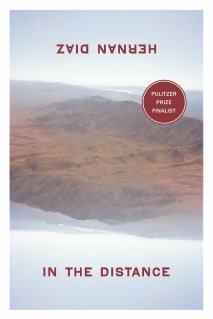
The gold In the Distance: a review of Hernan Diaz’s book

IMG_0214 (1).JPGA chance wander through a museum exhibit on British Columbia’s gold rush several years ago sparked my curiosity in California’s own gold rush in a way 4th grade history class (not to mention decades of living in that state) never managed to do; over the next several months I visited a number of gold rush sites, reading countless interpretive signs, historical marker plaques, and tourist pamphlets. I even made it through a good chunk of the massive Days of Gold: The California Gold Rush and the American Nation.

But wow, the events depicted in the fictional In the Distance by Hernan Diaz bring entirely new levels of insight and compassion to the varied and challenging realities people must have faced in those times, both externally and internally.

That said, this book is about so much more than the Gold Rush. I highly recommend it.

***

I decided to read In the Distance based on Roxane Gay’s review on Goodreads:

One of the best books I’ve read all year. The story, and the narrative voice is completely captivating. …the story itself and how it is told is absolutely unforgettable.

Fortunately for me, this book is part of Auckland Library’s vast e-book collection, and now I too can claim In the Distance as one of the best books I read in 2018.

Diaz_IntheDistance_Pulitzer_REV.jpgThe protagonist musters a surprising ability to face a range of often unfortunate conditions with equanimity and honor, while continuing to forge ahead with his seemingly-impossible quest. (In this sense he reminds me quite a bit of the convict in William Faulkner’s The Old Man, which I also loved, and which has also stayed with me quite strongly.) I was amazed at Diaz’s ability to convey interactions, landscapes, and objects through the eyes of someone who had never experienced anything like them before. Beginner’s Mind indeed!

Meanwhile, the author’s rich descriptions of San Francisco Bay, the the Sierra foothills, and deserts of America’s West, though unnamed and from a much different time, evoked more than a little nostalgia for places I know and love and am not sure when I might visit again.

Weeks after finishing it, this book still has me thinking about how we invent Purpose for ourselves. About the fine line (or is it attitude?) that differentiates Solitude from Loneliness. About those moments when we decide to Stop, and the moments when we have to Keep Going, even though we don’t want to. About Taking Stands when faced of inevitable suffering, and about Resignation when faced with the same. About Identities, both those that we choose, and those that get thrust upon us despite any desires we may have to set the record straight. About Learning, Curiosity, and Knowing, and how characters whose Obsessions are a few degrees more intense than our own serve as excellent mirrors. About Difference and Immigration. About unconsummated love and about that incessant Longing for something that lies just over the next horizon… if not even farther away.

My personality throughout my existences (and a new guide to business financing!)

A ritual often performed at the Auckland Buddhist Centre includes the following lines:

My personality throughout my existences…
I give up without regard to myself
For the benefit of all beings.

I’ve been thinking about my various existences because the company I work for just published a really useful resource, A guide to financing your business.

Guide.PNG

The content is top notch, it’s beautifully laid out and illustrated, the writing is clear, the whole thing flows well, and it’s easy to navigate. While it doesn’t really take a stand on the ethics or of any of the options and I’d have loved to see some case studies, it’s far more complete than I was expecting, and I’m really impressed!

And I had absolutely nothing to do with its creation, which feels incredibly strange. I was legitimately obsessed with this topic — my expertise in that rapidly-evolving field paid my bills, I got a massive grant to write a book about it — for more than a decade. I can’t pinpoint exactly when that particular obsession ended, but it’s been a HUGE relief to let go of the need to stay on top of the latest crowdfunding legislation or alternative lending innovations or who’s launching what new community investing fund… thankfully, we’ve got people like Jenny Kassan and Amy Cortese all over those 🙂

This shift in my attention makes me think of all the different identities I’ve embraced and then drifted away from over the years: Continue reading “My personality throughout my existences (and a new guide to business financing!)”

Ghost Ship memories

Two years ago today, Scott and I had been in Auckland barely a month. We were still living in this weird residential apartment in the CBD (Central Business District), directly next door to the record store where Scott now works.

We came out of a movie and I checked my phone, as one does. Amanda, a close friend of Scott’s and one of only three people Scott and I had in common before we met, had just posted a photo of Johnny, another close friend of Scott’s; he’s also a music producer and DJ. Before we left San Francisco, Scott and Johnny had spent weeks hanging out together at Green Apple Books as Scott trained Johnny to take over the music side of things there.

nackt.png

As I switched over to my Facebook feed, I started to piece together what was happening that night in Oakland. In a bizarre and modern version of “real time,” we witnessed our other friends’ collective scramble as news of the Ghost Ship fire spread through an endless stream of Facebook comments.

Despite everyone’s efforts, there was no news about Amanda and Johnny until the next day. We eventually learned that they had both died in the fire that night, along with so many more.

Everyone had something to say in the days that followed. So many posts and articles and replies and clueless reporters and only a few that, at the time, I believed came close to appropriately capturing the complexity of what was going on (thank you so much Gabe Meline!).

Here is what I wrote a week after the fire, mostly for myself, as I struggled to process it all. Looking at these words now I am struck by my desire to do something despite a deep sense of helplessness. The relief / guilt. The felt sense of being oh-so-far away. How hard it is to comfort those who need comforting when our own holes feel so large. It still feels important to hold space open for Amanda and Johnny. For Scott and Shanna and Andy and everyone else who remains, and for everyone who loves anyone.

***

Oh shit fire at Ghost Ship
Nothing in the news
Maybe Twitter will have more info?
Oh jeez look at this video
We would have been there Continue reading “Ghost Ship memories”

Gordon Walters and another attempt to ride the Möbius strip out of dual thinking

When I was a kid, my dad showed me a symbol he had come up with during his days in Berkeley in the 70s. It’s confusing either way you hold it:

IMG_20181126_171308     IMG_20181126_171314

To my great delight, a similar image started showing up all over Auckland back in July:

gordon-walters-painting-j-1974.jpg
Gordon Walters, Painting J 1974
Museum of New Zealand Te Papa Tongarewa
Courtesy of the Walters Estate.
Source: The Auckland Gallery website, accessed 26 November 2018

I loved the Gordon Walters exhibit at the Auckland Art Gallery, aka Toi o Tāmaki; I went twice (the museums here are free for New Zealand residents!) and bought the catalog to add to my collection of art books addressing the spiritual in abstract art. I also thought the Gallery did a good job of describing the cultural-appropriation controversy the artist found himself in the middle of, not to mention the fact that Walters and his friend Theo Schoon apparently appropriated artistic ideas from Rolfe Hattaway, a patient in a mental hospital?!

As someone who often sees the world in terms of the potential for quilt top patterns, the show gave me all sorts of inspiration for some appropriation of my own. As of this writing I’m seriously considering a Möbius quilt, just to ensure it’s entirely impractical and complicated. And nerdy and fun.

I’m really liking the Möbius strip as a symbol for non-duality:

[T]ry to choose an “up” and a “down” on a Möbius band. When you slide along the band, you eventually wind up at the same point you started at, but “up” has become “down.” … Its storytelling potential is clear: you travel around something, only to end up back where you started but disoriented.

Thanks to Evelyn Lamb over at Scientific American for that quote. It reminds me a lot of having once been a California girl driving North up Australia’s East Coast, on a different Highway 1, behind a steering wheel on the right side of the car, my car on the left side of the road, as the sun set over the hills, not over the ocean, and the entire world felt inside-out.

Up / Down. Both / And. Wherever you go, there you are… wherever that is.

Wake up to find out that you are the eyes of the world

There’s a particular feeling I get sometimes, a paradoxical combination of “wow I am just so connected to everyone and everything right now” and “wow I am totally incapable of describing this to anyone to my satisfaction, much less sharing it with them, gotta just sit here and experience it all by myself.”

Connected / Disconnected. All One / All Alone. Everyone / No One. Everything / Nothing. Self / No Self.  Object / No Object. Lately I’ve found some comfort in the belief that it’s possible to transcend this dualistic way of interpreting experience (Möbius?!), but then what words suffice?

Sometimes, songs are the friends I am looking for / are more immediately-available reflections of my half-twist inner landscape. Inevitably, when I find myself in the aforementioned state, lyrics from a particular Grateful Dead song pop unbidden into my consciousness:

Wake up to find out that you are the eyes of the world
The heart has its beaches, its homeland and thoughts of its own
Wake now, discover that you are the song that the morning brings
But the heart has its seasons, its evenings and songs of its own

And:

Sometimes the songs that we hear are just songs of our own

Here’s my favorite version available on Spotify:

Or, if you’re that kind of nerdy, give this 19-minute version a try and see, as you’re listening, if you end up back where you started, but with a slightly different perspective.

Full lyrics: Continue reading “Wake up to find out that you are the eyes of the world”

Someone please go see the Hilma af Klint exhibit at the Guggenheim in New York and send a report

I have a lot of feelings about the Hilma af Klint: Paintings for the Future exhibit currently showing at the Guggenheim in New York City.

Screenshot 2018-10-21 at 3.56.15 PM

A Lot Of Feelings!

A sampling:

Disappointment. That I didn’t realize this show was on until a few days ago, and so didn’t plan my schedule or budget in a way that I could make the show in person. Maybe I can see it next Spring, when it’s apparently coming to MOCA in Los Angeles (according to Moderna Museet at least, why can’t I find any evidence of this upcoming show anywhere else!)? ***UPDATE 17 January 2019: that link no longer mentions such a show either. It must have been a mistake 😦

Delight! That I discovered the show’s existence in time to pre-order the catalogue at a huge discount.

Anger. Of course the female artist who was one of the first abstract artists in the world was forgotten by history.

Hope. She may have been “unknown” during her lifetime, but that’s been changing since the ’80s, when her work was first made public via an international exhibitions… who else’s life’s work is still yet to be discovered? What might this teach us about the fluidity of history, and for those of us who attempt to document the past, humility at our inevitable inability to capture it all?

Curiosity. She kept her work hidden, stipulating that it not be shown for 20 years after her death. Depending on which account you read, there are different reasons for this. Why? How might her choice inspire, or at least inform, both my own choices, and my own feelings about how things go down in the world of women, work, and sharing our creativity and life’s work with audiences at all?

Confusion. Are all the paintings in the spiral gallery? How can this layout do justice to her massive pieces? Or maybe the bigger ones aren’t included in this exhibit? Or maybe those are being shown in the adjacent galleries?

I mean I’m no curator but I’ve been an enormous fan of Hilma af Klint since I first discovered her paintings twenty years ago, and in poring over the internet for photos of other exhibits, I discover that I react very strongly to how her work has been shown in the past. Some exhibits shove the works far too close together for my liking, for instance.

I love this particular juxtaposition:

HilmaafKlintStockholm
Photo by Moderna Museet, source

And look how spectacularly they were presented in Berlin:

hilmaafklintbatmantoo.jpg
Photo by batmantoo, source

***

So yes, argh, I wish I’d known sooner so I might have made plans to visit New York while this show will be running. In the meantime, I’m imagining the opportunity to do this:

hilmaafklint-fromfloor.jpg
Source: …how can you find the original sources anymore on the internet?! I found it here, which includes a credit that I’ve tried and failed to track down further: “Photo @johanoevergaard”

Or even this:

In the meantime, I will watch this:

…and hope that someone who understands everything I have written about above will physically attend the show in person and tell me all about their experience.