How “Mindful Emotion: a Short Course on Kindness” influenced my decision to become a Mitra

Back in May, Vajrajyoti forwarded me a request from Windhorse Publications, the publishing company that publishes Sangharakshita’s writing, and almost all of the books written by Triratna Order Members. They were asking if people would create a short a video explaining how one of their books had influenced their lives.

So I made this video about how Mindful Emotion: a Short Course on Kindness, by doctors Parabandhu Groves and Jed Shamel, influenced my decision to become a Mitra:

You can watch the rest of the videos in their #lifechangingbooks series here.

I Love Lizzo

Feeling the same kind of way about Lizzo that I did when I discovered Janelle Monae’s Pink and then some. Hat tip to Mitra Jouhari on The Creative Independent for turning me on to this wonder. Oh, to be this positive!

Juice mantra:

If I’m shining EVERYBODY gonna shine

And she is so shiny… just dumping all my faves here (and I thought it was funny when 2 Chainz married himself), including an Anchorman spoof at the bottom. #flutegoals

Enjoy!

More than one way to write a story

You may have seen Mandy Len Catron’s recent article, What You Lose When You Gain a Spouse. I share the author’s experience that many of the costs associated with marriage ring true for those of us who are partnered-and-co-habitating, if not actually married. 

But the part of the article that made me yell out loud in agreement was this sentence, a quote from psychologist Bella DePaulo:

 When the prevailing unquestioned narrative maintains that there is only one way to live a good and happy life, too many people end up miserable.

I believe we could replace “…live a good and happy life” with just about anything and it would still hold: when there is only one way to “raise a child,” or “save the world,” or “use gender pronouns,” too many people end up miserable.

I also believe we need to question the narrative that there is only one way to write a life story.

Six months ago I attended a long-weekend writing workshop to see if I wanted to sign up for the school’s longer program. The MFA-esque course in fiction and memoir writing would have required a significant shift in life priorities, and I was seriously considering it. I decided not to sign up for a number of reasons, including the fact that I found myself more than a little triggered by the main instructor’s assumptions that:

  • Being published would obviously be our primary — if not only — motivation for investing in such a program, and 
  • The only way to get published is to follow the very specific, tried-and-true story arc.

Now I’m not arguing that the Story Arc doesn’t work for that specific purpose, but I am Very Resistant to the idea that it is the ONLY way to tell a story. I know I know — you have to learn the rules before you can break them, etc. But some of us would rather not pay cash money for yet another experience of learning that we “have to” mold ourselves to someone else’s — or some entire tradition’s — definitions of how we should be in order to be “successful.”

(Related: except for one piece by Arundhati Roy, the authors of every single excerpt we studied, and every member of the longer program’s listed faculty, and every one of my fellow students, were white. I recently read a powerful account of a woman’s experience of racism during a writing class and am grateful that none of my fellow workshoppers behaved as unskillfully! Still, I am weary of wondering if I am the only one in the room who even notices details like those I listed above. And I wish it were possible for me to simply appreciate the curriculum, rather than also having to weigh the pros and cons of bringing up what — and whom — it leaves out.)

And so, rather than polish my craft under the watchful mentorship of professional writing teachers, I continue to write rambling, unpolished pieces for… myself. And you 🙂

***

Speaking of stories, I loved Tommy Orange’s There There. My friend Mike, the most prolific recommender of books I know, suggested I read it long before the New York Times listed it as one of their best books of 2018, but I didn’t get to the top of the waiting list for the library’s electronic copy until the end of December. Took me only two days to finish as I couldn’t put it down.

As a follow-up, Mike suggested Terese Marie Mailhot’s Heart Berries: A Memoir. “A much different book,” he said, “but crazy intense as well.”

Wow wow wow, so much REAL! 

And a very interesting structure. To be honest I can’t remember whether it follows THE Arc or not; there were so many other details that held my attention, including the author’s choice to name the names of those who had harmed her and her mother. 

Even before reading Heart Berries, I’d spent a fair bit of time lately thinking about:

  1. The ownership of stories (as in: what are the ethics of telling other people’s stories, even if they belong to the author as well?);
  2. The difference between what actually happened and what we remember, and how much / when that difference ultimately matters; and
  3. The many ways we (as individuals, families, institutions, a society in general) practice “healing” and “justice” in the aftermath of the various types of trauma we cause each other, sexual and otherwise.

There’s a lot to sift through and process. In the book and in our own lives, clearly.

The very next book I read was Maggie Nelson’s Bluets, also a memoir of sorts, which I discovered because a bunch of people on The Creative Independent (a collection of essays and interviews that Kickstarter publishes to support the emotional and practical needs of creative people) keep recommending it.

And now I would like to recommend it to you! Nelson’s writing in Bluets is beautiful, lyrical, and explicit in its exposition of the messy, nonlinear cycle of remembered joy –> nostalgia –> shattering grief –> –> coming back together again.

As I was reading Bluets I couldn’t help but notice the similarities between its structure / tone / the author’s approach to writing about vulnerability / relationships / heartache (etc) and Mailhot’s in Heart Berries. Because I like being right, I said to Scott, “she must have been inspired by Maggie Nelson,” though I knew full well he hadn’t read either book.

***

In an April newsletter from independent publisher Catapult, they announced their latest offering, Meander, Spiral, Explode: Design and Pattern in Narrative, by Jane Alison. I look forward to reading its “deeply wacky pleasures,” as described in this New Yorker review.

In the meantime I can’t stop thinking about the excerpt quoted in the book’s description: 

For centuries there’s been one path through fiction we’re most likely to travel— one we’re actually told to follow—and that’s the dramatic arc: a situation arises, grows tense, reaches a peak, subsides . . . But something that swells and tautens until climax, then collapses? Bit masculosexual, no? So many other patterns run through nature, tracing other deep motions in life. Why not draw on them, too?

I thought about sending a copy to the writing program’s leader, who also happens to be an acquaintance of mine, but I suspect I’m only tempted to do so for ego-boosting reasons (Scott points out that this piece isn’t exactly a conversation starter).

Also, it’s sold out.

***

A few weeks ago, after the similarities had been gnawing at me for months, I resorted to Googling whether anyone else had, in internet-discoverable format, compared Mailhot’s style in Heart Berries to Maggie Nelson’s in Bluets.

What I found was so much more exciting than that: an entire Atlantic article in which Mailhot describes Bluets as a critically-important inspiration for her own work, and tangentially, her marriage. 

She goes on to critique “the established MFA aesthetic” (which she describes as “essentially white”):

I’m suspicious of when we try to compartmentalize the formula for success as an author, instead of just inviting the person to be as weird as they need to be to express something. Let them be the person they’re supposed to be, instead of trying to mold them into the aesthetic of this moment. It’s so difficult and important for teachers to try to bring that weirdness out.

Again, I’m tempted to substitute any other description of identity where the word “author” appears here. Why not challenge the compartmentalized formula for success as a woman, a man, a couple, an employee, or anything else for that matter?

I read these quotes as Calls to Action to become the teacher / friend / sister / daughter / partner / colleague that I want to be: the one who, by fully embracing both my weird and conventional qualities, contributes to the cycle of bringing out the unapologetically weird and conventional in others. And I offer an immense Thank You to those of you who have let your own evolving self shine forth, as this has helped me come to love and express my own.

Body and Head Alone – two songs for the times from Julia Jacklin

We went to see Julia Jacklin again last week. Afterward Scott remarked that there’s no way to write about something you appreciate without also reducing it and I know exactly what he means; what to do, though, when you want to share?

Without further reducing her work, I offer these:

(For the record, unlike the two songs I recently posted that do resonate strongly for mepersonally, these two songs seem to fit the times more than they fit me, if that makes sense?)

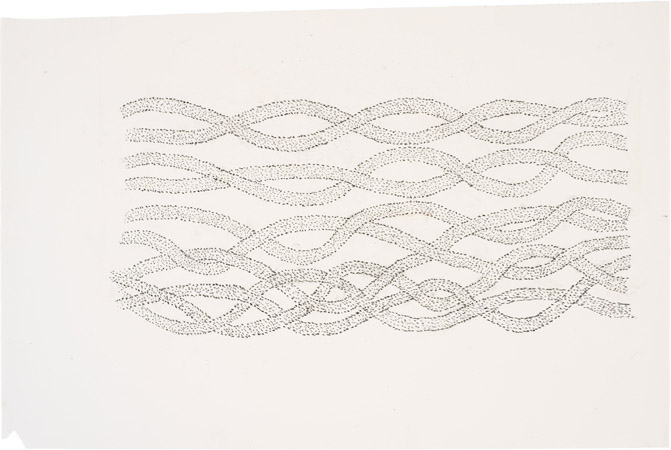
Interwoven


AnniAlbersUntitled.jpg
Anni Albers
Untitled, n.d.
lithographic crayon on graph paper
2312 × 1512 in. (59.7 × 39.7 cm)
1994.10.276

I found this lovely weaving/drawing/metaphor here

Fun fact: Auckland’s housing is even less affordable than San Francisco’s

According to Demographia’s latest study (which I found quoted in The Guardian, so hopefully we’re not all spreading fake news), these were the least affordable major housing markets in the 3rd quarter of 2018*:

  1. Hong Kong
  2. Vancouver
  3. Sydney
  4. Melbourne
  5. San Jose
  6. Los Angeles
  7. Auckland
  8. San Francisco
  9. Honolulu
  10. London and Toronto

*In Australia, Canada, China [Hong Kong Only], Ireland, New Zealand, Singapore, the United Kingdom and the United States, as measured by median housing price / median household income.

Clearly my immediate family has expensive luck/taste; between my parents and brother and me, the four of us were born/grew up in, lived for a significant period of time in, or currently live in (or very close to) a walloping six out of these eleven cities, located in three different countries!

Want more geeky tables? Continue reading “Fun fact: Auckland’s housing is even less affordable than San Francisco’s”

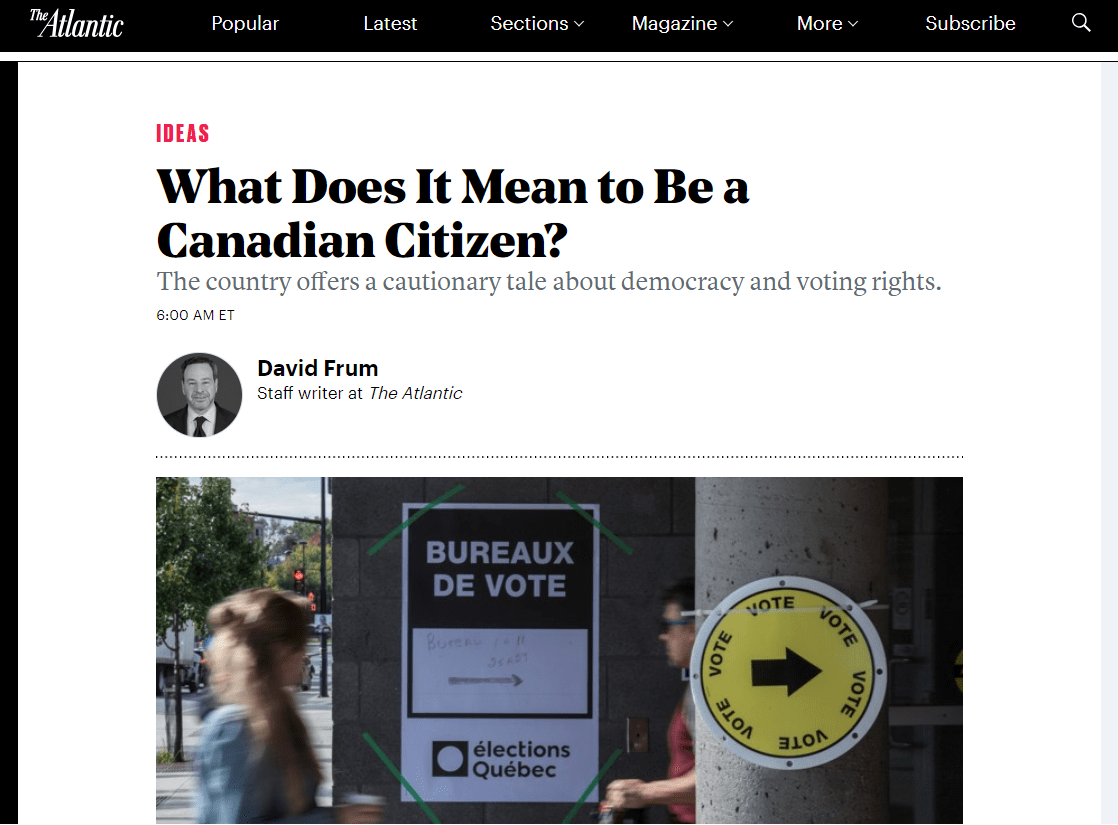
What does it mean to be a citizen?

As I was writing my last post (about getting permanent residency in New Zealand), I ran across a timely article in The Atlantic:

Canadian.png

I loved the questions at the end:

What does it mean to be a citizen? Is citizenship a kind of subscription service, to be suspended and resumed as our needs change? Are countries competing service providers, their terms and conditions subject to the ebbs and flows of consumer preference?

On another part of the spectrum, I’ve been fascinated by the case of Shamina Begum in Syria… what if you could be stripped of your only citizenship, becoming, as they say, “stateless”?

Again, I’m very grateful to have options.

We are now officially permanent residents of New Zealand + some thoughts on global mobility

On the 20th of February, I got an email from Immigration New Zealand (INZ) informing me that they’d approved our application to become permanent residents. I’m super relieved as this was kind of hanging over us for a while, even though there was very little chance that it would not work out in our favor.

Here’s what permanent residency means for us [I’m not an immigration consultant blah blah legal disclaimer check INZ’s website for the latest and greatest info]:

  • We can now vote;
  • Our continued existence here is no longer tied to my current job (not that I’m interested in quitting, it’s just nice to know I’m not stuck if it ever ceases to be a good fit);
  • I can now do jobs on the side (this wasn’t permitted on my specific work visa)
  • We can get credit cards (not to carry a balance, but to get cash back on all our purchases!);
  • We can buy a house (not that we can currently afford any houses we’d want to live in, it’s just that the new government here recently passed a law that foreigners cannot buy existing houses, only build new ones… and even before that law changed, banks wouldn’t give us a mortgage unless we were residents anyway);
  • We can go to school (we weren’t allowed to study for more than 3 months on our work visas before)…
  • …at local tuition rates (which are ~1/3 of the rates for foreigners, this number varies a lot depending on which program and which university);
  • We qualify for KiwiSaver, NZ’s retirement plan (employers are required by law to match employee contributions up to 3% for employees who opt into the KiwiSaver plan, so I’m signing up right away. And yes, if you leave the country you get to take your KiwiSaver funds with you); and
  • We’re pretty sure Scott’s existence here is no longer tied to our relationship… though we have no plans to test that out 🙂

The “permanent” part of our residency means that we can Continue reading “We are now officially permanent residents of New Zealand + some thoughts on global mobility”

Road trips: 20s vs 30s vs 40s

It’s been four and a half years since my last proper road trip. “Proper” as in just me and my car, plus the bare necessities required to cook and sleep wherever I happened to find myself. Most importantly, aside from one scheduled speaking gig, I had no agenda on that trip, no end date or even a route to stick to. I was on the road for nearly four weeks.

That much time on the road would have felt like nothing to my 20s self, who spent months-at-a-time traveling. I never have that much time off work at a stretch these days, but I’m not sure the time would make a difference anyway; we cut our four-day New Year’s road trip short to come home early, not because we don’t love the Far North, but because we love being home even more.

Last week, when I’d rather have been anywhere other than moving Home from one house to another in seemingly-endless short drives, I happened upon two videos that brought that big road trip energy back in a major way:

I love how they each evoke so differently that sense of a road trip’s freedom and independence and vulnerability and power and space to contemplate and just be. I also love the contrast of Maggie’s 20-something urgency compared to Sarah’s 30-something reflective mellow. I’m probably projecting. Nevertheless… yay for women taking to the road alone, may this tradition persist. One of these days I’ll get back out there.

Expensify this

My day job, as you’ve probably noticed by now, involves making YouTube videos for a small business audience. At a small business software company.

Expensify, another small business software company, just won that game with their Superbowl ad:

When my colleague Luda shared this with me last week it had fewer than 500 views; it has 7.2 million as I’m writing this. They’ll be paying an estimated USD$5.25 million to air the ad during the game, and I am so curious what percentage of those YouTube views they paid for. A lot of people are commenting that when they clicked to watch the video, the same one comes up as an ad, so clearly they’re paying more than they should have…

I was only half joking when told Luda I might as well quit, there’s no touching their big-budget over-the-top interactive star power collab sweepstakes approach. Definitely not my style, but still… wow. I catch new details every time I watch (”smoke a bong with a porcupine,” why not?) and I’ve watched it So. Many. Times. I even tried scanning the receipts but couldn’t get any of my blurry screenshots to scan properly in the app, which I already have on my phone because that’s what we use for our expenses. I feel so Silicon Valley right now.

Well played, Expensify, well played.