
I offered to put together a list of my favorite books from Aotearoa (New Zealand) for someone who is about to take a trip there… and then got quite distracted. If you are reading this paragraph, it is still a work in progress!
Not books, and important cultural context
In 2018 I wrote about the importance of trying to pronounce Māori words correctly. It can be tricky for people who speak American English. I’ve since realized it helps to know that the vowel sounds are almost identical to those in Spanish, in case you’re familiar with that language.
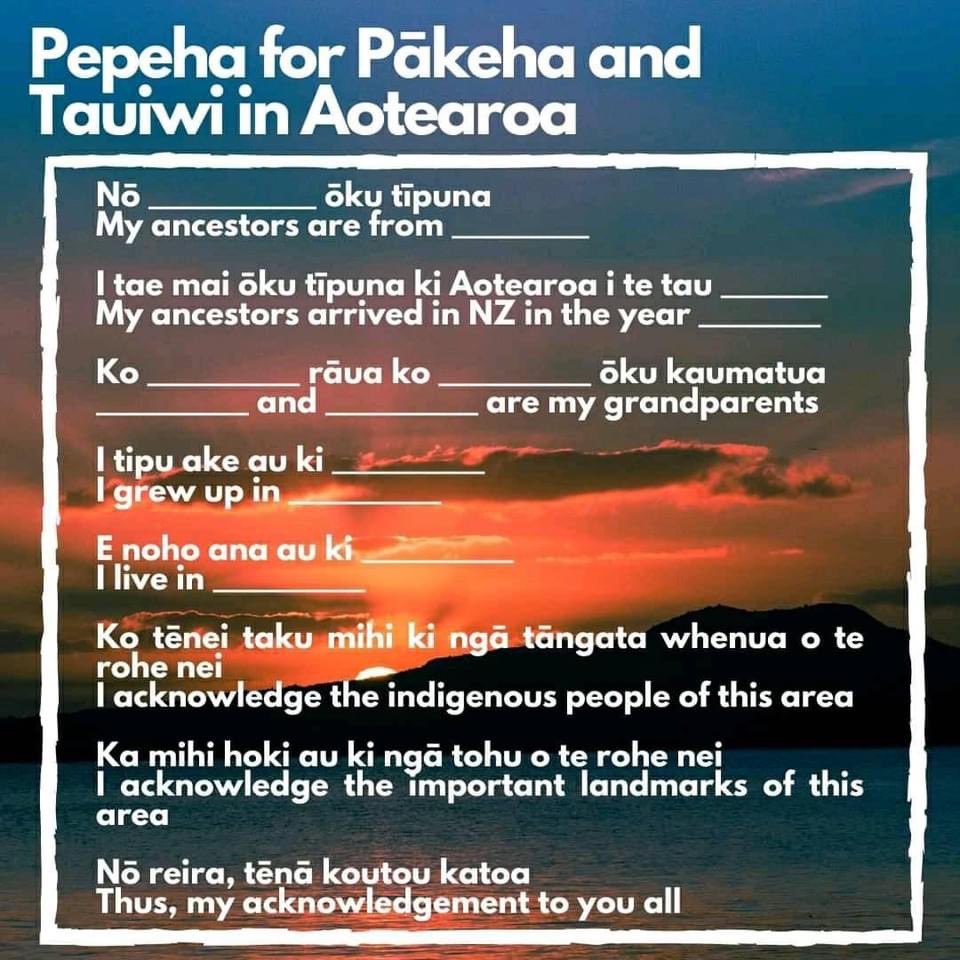
You might encounter instructions for introducing yourself the traditional Māori way… and if you are not in fact indigenous to the place where you’re from, there are ways to do this more respectfully. These suggestions are from Auckland Libraries:


Books!
Imagining Decolonisation is, like many books from publisher BWB, a short and sweet collection of thought-provoking essays. It was a bestseller for years at the time I was first starting to get my head around what healing from colonisation might look like. It is where I started. For me, the most powerful essay is from the late, great Moana Jackson (Ngāti Kahungunu, Ngāti Porou, and Rongomaiwahine), remembered here.
If you don’t intend to read Imagining Decolonisation, please at least check out this reflection on the wild success of the book from writer and ‘artivist’ Anahera Maire Gildea (Ngāti Raukawa-ki-te-Tonga). At the end she includes a poem from Sedition, her excellent collection of poetry. It is published by Taraheke | Bushlawyer, a “collective of indigenous women writers and allies from Aotearoa and so-called Australia” who “publish collectively to protect story sovereignty from the appropriative juggernaut of the book industry. All profits to #landback.” Yeah!
Also from Taraheke, I was challenged in a very good way by the poems in Michaela Keeble’s (Pākehā, white Australian) Surrender. As soon as I finished I immediately purchased several copies for friends who are also examining their complicity in colonial violence.
A bathful of kawakawa and hot water, by Hana Pera Aoake (Ngāti Mahuta, Tainui/Waikato, Ngāti Hinerangi), is a beautiful and heartbreaking collection of poetry and essays from someone who loves AND left Aotearoa; she now lives in Lisbon. I’m not sure an e-version exists but you can also read examples of her poetry here and here.
Alice Te Punga Somerville (Te Āti Awa, Taranaki) is a scholar and poet who recently escaped the racism of New Zealand academia for University of British Columbia in Canada. While of course my experiences in primarily-white institutions differ from hers, I shuddered to recognize so many of the dynamics she covers poetically in Always Italicise: how to write while colonised.
I loved loved loved Echidna, a collection of poems by essa may ranapiri (they/them pronouns, Ngaati Raukawa, Highgate, Na Guinnich… and/or Ngaati Raukawa, Te Arawa, Ngaati Puukeko, Ngaati Takatāpui, Clan Gunn, Horwood? depends where I look). It feels like a love letter to the lineage of local poets who inspired them. This might also make the collection a bit inaccessible if you aren’t familiar with that scene? I wish I could open it up to tell you but I’m currently separated from my library… Quite a bit of their work is available via links on their website, including poetry, essays, and reviews.
Etc
Nadine Anne Hura is a writing hero and a friend. Her journalism, personal essays, scathing critiques of the publishing industry (etc) inspire me SO MUCH. I could go on and on about the way she weaves a basket out of grief that is somehow big enough to hold us all. You can check her out her work on The Spinoff (my fave independent news outlet, and source of so much excellent social commentary) here.
TO BE CONTINUED…
 Elizabeth Ü